of prostate-specific antigen (PSA) marker and men: men, the key test is not the absolute PSA level, NO, it's the PSA 'velocity' & 'doubling time'; this is the PSA kinetics we are to be interested in;
on how the PSA level changes across time; and it's complicated; why? 'PSA is mostly found in semen, which also is produced in the prostate. Small amounts of PSA ordinarily circulate in the blood.


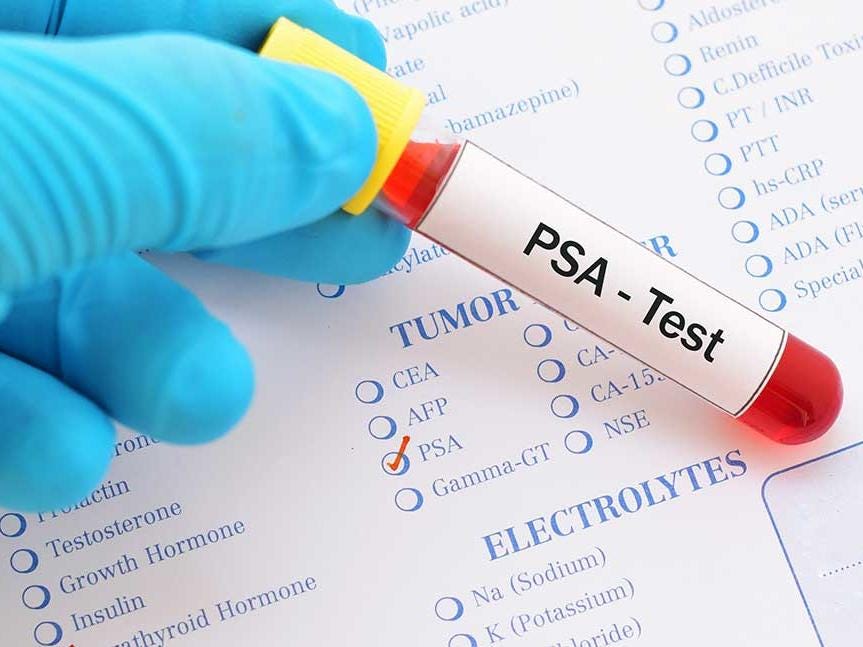
The PSA test can detect high levels of PSA that may indicate the presence of prostate cancer. However, many other conditions, such as an enlarged or inflamed prostate, also can increase PSA levels. Therefore, determining what a high PSA score means can be complicated.’ Importantly, PSA test is not perfect, lots of false-positives (and false-negatives) and as such, needless traumatic over-treatment, and the CAP randomized controlled study (among the largest studies ever done) raised important questions when they looked at a single PSA screening intervention vs standard practice without screening, finding no significant difference in prostate cancer mortality after a median follow-up of 10 years.
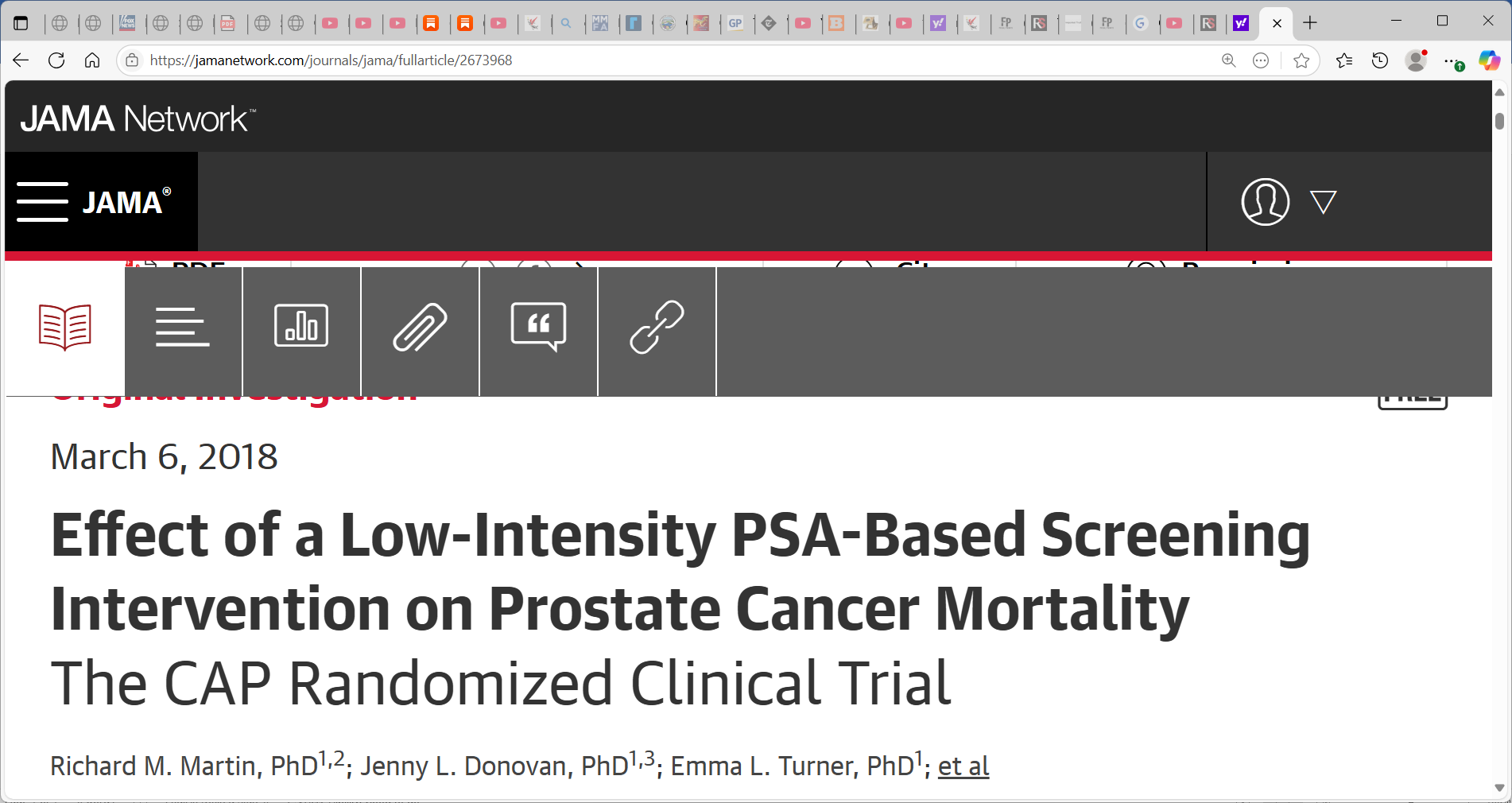
‘Design, Setting, and Participants The Cluster Randomized Trial of PSA Testing for Prostate Cancer (CAP) included 419 582 men aged 50 to 69 years and was conducted at 573 primary care practices across the United Kingdom. Randomization and recruitment of the practices occurred between 2001 and 2009; patient follow-up ended on March 31, 2016.’
Main Outcomes and Measures Primary outcome: prostate cancer–specific mortality at a median follow-up of 10 years. Prespecified secondary outcomes: diagnostic cancer stage and Gleason grade (range, 2-10; higher scores indicate a poorer prognosis) of prostate cancers identified, all-cause mortality, and an instrumental variable analysis estimating the causal effect of attending the PSA screening clinic.
Results Among 415 357 randomized men (mean [SD] age, 59.0 [5.6] years), 189 386 in the intervention group and 219 439 in the control group were included in the analysis (n = 408 825; 98%). In the intervention group, 75 707 (40%) attended the PSA testing clinic and 67 313 (36%) underwent PSA testing. Of 64 436 with a valid PSA test result, 6857 (11%) had a PSA level between 3 ng/mL and 19.9 ng/mL, of whom 5850 (85%) had a prostate biopsy. After a median follow-up of 10 years, 549 (0.30 per 1000 person-years) died of prostate cancer in the intervention group vs 647 (0.31 per 1000 person-years) in the control group (rate difference, −0.013 per 1000 person-years [95% CI, −0.047 to 0.022]; rate ratio [RR], 0.96 [95% CI, 0.85 to 1.08]; P = .50). The number diagnosed with prostate cancer was higher in the intervention group (n = 8054; 4.3%) than in the control group (n = 7853; 3.6%) (RR, 1.19 [95% CI, 1.14 to 1.25]; P < .001). More prostate cancer tumors with a Gleason grade of 6 or lower were identified in the intervention group (n = 3263/189 386 [1.7%]) than in the control group (n = 2440/219 439 [1.1%]) (difference per 1000 men, 6.11 [95% CI, 5.38 to 6.84]; P < .001). In the analysis of all-cause mortality, there were 25 459 deaths in the intervention group vs 28 306 deaths in the control group (RR, 0.99 [95% CI, 0.94 to 1.03]; P = .49). In the instrumental variable analysis for prostate cancer mortality, the adherence-adjusted causal RR was 0.93 (95% CI, 0.67 to 1.29; P = .66).
Conclusions and Relevance Among practices randomized to a single PSA screening intervention vs standard practice without screening, there was no significant difference in prostate cancer mortality after a median follow-up of 10 years but the detection of low-risk prostate cancer cases increased. Although longer-term follow-up is under way, the findings do not support single PSA testing for population-based screening.’
PSA is the fluid that the body produces in which semen is contained: here is a quick analysis https://teachmeanatomy.info/pelvis/the-male-reproductive-system/prostate-gland/ I WORKED for for the CPDR.. (Center for Prostate Disase Research) for three years.. and built a database for the military which was specifically for those men who had prostate cancer in all its forms. PSA is ONE of the markers which is routinely measured; IF IT iS GREATER THAN 4.0 then and usually it is done w/ a DRE (Digital Rectal Exam) to check for hypertrophy. All the patients (I can say ALL HERE) were over the age of 65 because they were retired military. The US TOO support group still exists and SEERS database still exists. YEARS OF WORK by Walter Reed and military bases across the country (WITH INFORMED CONSENT of course) were included in this database. I FIND IT IMPOSSIBLE TO BELIEVE THAT Joe Biden did not have testing for his Prostate. IT IS ROUTINE TESTING and done, especially in older men when it presents. The database was used to query cohorts of men by race, age, ethnicity and also if prostate cancer had a genetic component. EVEN WHEN I WORKED THERE many treatments were being worked on like the "targeted radioactive seeds" into the prostate which did work depending on the Stage presented (CAUGHT EARLY,, even a DRE or enlarged prostate is a marker which can be seen now days (called Benign Hypertrophy of the prostate which can cause the urinary symptoms. SO WHAT THE HELL HAPPENED. YOU don't even need to present all those numbers. My theory is that around the time he had the "exam" for the "skin cancer" Walter Reed doctors also found the Prostate Cancer or even before then. I am very very sorry for Joe Biden that he was so maltreated by his family and DOCTORS who had to know. If the doctors didn't know they deserve to lose their license. well I need to go. that is a good article: IT IS MORE SIMPLE THAN THAT THOUGH. I will pray that Joe Biden gets the pain management needed for the bone metastasis. The DEMOCRATS are really callous evil people and Jill too.. wow. is all I can say.
The trend is your friend. Yearly trend will show slow increase. When it starts getting higher, tests can be done more frequently. The trend needs monitored but I never see much look at the trend by a doctor, just the single measure. You can go to lifeextension.com and get a test for around $30 and go to a labcorp to get the blood drawn (no extra fee). It's a cheap test and can be done monthly to monitor the trend if it looks to be getting agressive. And start taking action EARLY to slow the trend and keep it down in the 2s if possible, lower the fat, dairy or eliminate, cut out the sugar, take anticancer supplements, white button mushroom extract, curcumin, a lot of greens, broccoli, cauliflower etc. Use AI for more info. Fresh ground flaxseed another. Do your homework.